Search
9,253 results found

video:
Weep, O Mine Eyes - John Bennet (Tenor's Guide)
Weep, O Mine Eyes - John Bennet (Tenor's Guide)
“Weep O Mine Eyes” was first published by composer John Bennet (c. 1575-c. 1610) in his first collection of madrigals in 1599. It was one of his most popular madrigals, as well as one of the most internat... moreWeep, O Mine Eyes - John Bennet (Tenor's Guide)
“Weep O Mine Eyes” was first published by composer John Bennet (c. 1575-c. 1610) in his first collection of madrigals in 1599. It was one of his most popular madrigals, as well as one of the most internationally famous songs of the period. It is apparently based on John Dowland’s “Flow, my Teares”.
Like Dowland’s lyrics, these lyrics express an intense melancholy of someone whose happiness has been abruptly shattered and desires to not be saved from this dark despair. The speaker wishes his death by drowning in his despair, in his tears. The expression of melancholy, and notions of darkness, neglect, Time’s cruelty, spiteful age, were themes used by Elizabethan songwriters to prefigure the stark inevitability of death, and it remained a prominent feature of English literature and music in the time of Elizabeth I and Shakespeare.
More Information, contact us:
guide4score@gmail.com less

video:
Weep, O Mine Eyes - John Bennet (Bass' Guide)
Weep, O Mine Eyes - John Bennet (Bass' Guide)
“Weep O Mine Eyes” was first published by composer John Bennet (c. 1575-c. 1610) in his first collection of madrigals in 1599. It was one of his most popular madrigals, as well as one of the most internatio... moreWeep, O Mine Eyes - John Bennet (Bass' Guide)
“Weep O Mine Eyes” was first published by composer John Bennet (c. 1575-c. 1610) in his first collection of madrigals in 1599. It was one of his most popular madrigals, as well as one of the most internationally famous songs of the period. It is apparently based on John Dowland’s “Flow, my Teares”.
Like Dowland’s lyrics, these lyrics express an intense melancholy of someone whose happiness has been abruptly shattered and desires to not be saved from this dark despair. The speaker wishes his death by drowning in his despair, in his tears. The expression of melancholy, and notions of darkness, neglect, Time’s cruelty, spiteful age, were themes used by Elizabethan songwriters to prefigure the stark inevitability of death, and it remained a prominent feature of English literature and music in the time of Elizabeth I and Shakespeare.
More Information, contact us:
guide4score@gmail.com less
video:
Le chant des oyseaux -- Clément Janequin - The Stairwell Carollers, Ottawa.
Ottawa choir, The Stairwell Carollers, perform "Le chant des oyseaux" by Clément Janequin (c. 1485 -- 1558) a French composer of the Renaissance. He was one of the most famous composers of popular chansons of the entire Renaissance.
Audio: Tom Barnes.... moreOttawa choir, The Stairwell Carollers, perform "Le chant des oyseaux" by Clément Janequin (c. 1485 -- 1558) a French composer of the Renaissance. He was one of the most famous composers of popular chansons of the entire Renaissance.
Audio: Tom Barnes. Recorded at St. Barnabas Church, Ottawa, Ontario, Canada, June 18th, 2011.
Stills: Holly Massie
Videographer: Zoe Hart.
Editing: Pierre Massie
video:
SHINE: Coastal Sound Children's choir
In their own words, Children's choir singers explain what SHINE means to them in the context of singing in choir. Rollo Dilworth's "Shine On Me", as sung by the choir in rehearsal, provides the back track for the video.
blog:
World Music choir Seeking Exchange Opportunity With Other choirs
Vocal Explosion Hastings
Would like to invite your choir to Hastings
Is Your choir interested in a choir Exchange?
We are Looking for choirs in France, Belgium or Germany to Exchange with Preferablly performing in the world/folk genre
We would off...
group:
PoliPop
PoliPop is the first choir that sings popular music in Turkey. We have two choirs, adult and children choir. If you want to sing pop music in choir please contact with us.
group:
Vacilando
Vacilando is the newest choir in the Kokopelli choir Association, created in response to many requests for an adult choir in our organization! The word 'vacilando' is Spanish, and refers to taking enjoyment out of the journey rather than focusing on the ... moreVacilando is the newest choir in the Kokopelli choir Association, created in response to many requests for an adult choir in our organization! The word 'vacilando' is Spanish, and refers to taking enjoyment out of the journey rather than focusing on the destination. As such, the choir will take a more casual approach to music-making, with fewer performances throughout the season than Òran, our young adult choir. The group will still place an emphasis on all the things that make Kokopelli's music-making unique, however: community, multiculturalism, choral excellence, and multifaceted performances. less
video:
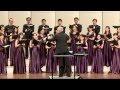
K. Nystedt: Die Güte des Herrn 上主之美善
2013.5.20
北歐音畫夏季音樂會 2
大東文化藝術中心演藝廳
指揮: 科勒.漢肯 Kåre Hanken
Die Güte des Herrn - Knut Nystedt
上主之美善 - 倪斯泰德
倪斯泰德(Knut Nystedt, 1915-)為挪威管風琴家與作曲家,多創作管絃樂與合唱作品。1946-82年間擔任Oslo Torshov Church的管風琴師與唱詩班指揮的職務;1950年創立了挪威獨唱家合唱團(Det Norske Solistkor),多次帶領合唱團... more2013.5.20
北歐音畫夏季音樂會 2
大東文化藝術中心演藝廳
指揮: 科勒.漢肯 Kåre Hanken
Die Güte des Herrn - Knut Nystedt
上主之美善 - 倪斯泰德
倪斯泰德(Knut Nystedt, 1915-)為挪威管風琴家與作曲家,多創作管絃樂與合唱作品。1946-82年間擔任Oslo Torshov Church的管風琴師與唱詩班指揮的職務;1950年創立了挪威獨唱家合唱團(Det Norske Solistkor),多次帶領合唱團至世界各地演出;1970年代間引進了新浪漫風格與多元化影響挪威音樂,並開發了新的合唱技巧與強調注重音色的任何可能性。
1990年所完成的〈上主之美善〉,為無伴奏混聲八聲部合唱曲,歌詞選自舊約聖經耶利米哀歌第二章第18-20節與第三章第19-26、40節,誠心呼求上主的憐憫與慈愛,並結束在全曲燦爛高潮處,全曲雖為慢板速度卻表現極富張力的情緒。
Die Güte des Herrn
Schreie laut zum Herrn,
klage, du Tochter Zion, lass Tag und Nacht Tränen herabfliessen wie einen Bach;
Höre nicht auf damit, und dein Augapfel lasse nicht ab!
Steh des Nachts auf und schreie zu Beginn jeder Nachtwache,
Schütte dein Herz aus vor dem Herrn wie Wasser.
Hebe deine Hände zu ihm auf um des Lebens deiner junger Kinder willen,
die vor Hunger verschmachten an allen Strassenecken!
Herr, schaue und sieh doch
Wen du so verderbt hast!
Gedenke doch, wie ich so elend und verlassen, mit Wermut und Galle getränkt bin
Du wirst ja daran gedenken; den mein... less